By the Subastral Inc. Team — supplying retail store fixtures since 2006
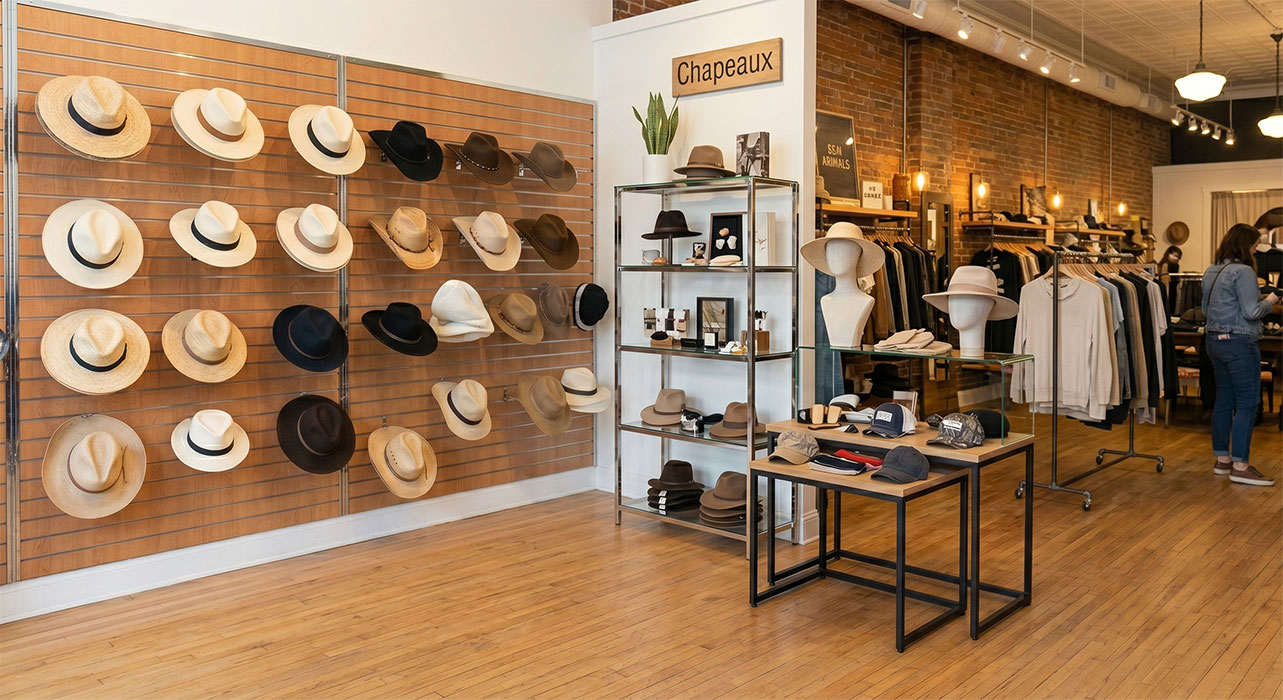
Hats are one of the most versatile accessories in retail, but they’re also one of the trickiest to merchandise well. Unlike folded apparel or boxed goods, a hat’s appeal depends almost entirely on its shape. A fedora, a wide-brimmed western hat, or a classic baseball cap all rely on that structure to look good on a shelf. Crammed flat or tossed onto a clearance rack, that shape collapses — and so does the sale.
Over years of helping stores set up their headwear sections, we’ve seen the same handful of layout choices separate a hat wall that sells from one that just sits there. The good news is that fixing it rarely means a full remodel — it usually comes down to choosing the right retail hat display fixtures for each style of hat and giving them room to keep their shape.
1. Preserving Shape and Form: The Golden Rule of Headwear
A crushed crown or a bent brim turns a hat into damaged goods in a shopper’s eyes — even if it’s never been touched. Different styles need different support:
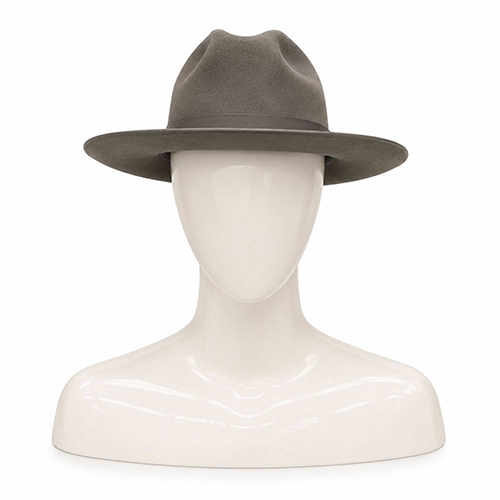
- Fashion and wide-brim hats. Straw panamas, wool fedoras, and sun hats need individual crown support. A canvas wig head and stand or a mannequin head form gives these a boutique look and lets the brim hang the way it’s meant to, instead of flattening against a shelf.
- Western and cowboy hats. Rigid, wide brims get crushed fast on standard shelving. A heavy-duty cowboy hat holder built for wall systems supports the crossbar of the crown so the brim hangs safely in open air rather than pressing against anything.
- Baseball caps. A ball cap slatwall display rack lets you stack multiple caps front to back, keeping the front panel crisp while packing in a lot of inventory per linear foot.
One small thing that gets overlooked: if you’re using a plain metal ring or hanger bracket, slip on a hat display foam cover. It adds friction so the hat doesn’t slide off, and protects the sweatband from creasing against bare metal — a small fix that noticeably extends how long a hat looks “new” on the shelf.
2. Elevate Your Inventory with Modular Wall Space
A well-planned hat wall display turns some of the most valuable real estate in a store into a high-visibility selling zone. Wall space is visible from across the floor and naturally pulls the eye upward. If your hat inventory is more than a shelf or two can handle, flat shelving alone will cap your visibility — literally.
Modular wall configurations let you reset the section by season without rebuilding it. Swap heavy winter beanies for wide-brimmed sun hats in spring, then flip back in fall — the fixtures stay, only the product changes.
On a slatwall or gridwall layout, mixing straight shelving with face-out brackets works well: chrome slatwall hat displays or gridwall hat display brackets let hats cascade down the wall crown-first, which is roughly how a customer pictures wearing one. We’ve found that placing these brackets at or just above eye level tends to get hats noticed faster than the same product on a lower shelf, simply because shoppers see the front of the hat rather than the brim from above.
For the gaps between face-out brackets, adding display shelves gives you a spot to stack folded scarves, matching bags, or knit beanies — small additions that round out the section without crowding it.
3. Capture Foot Traffic with Center-Floor Display Tables
Walls are good for organizing depth of inventory, but the center of the floor is where casual browsers stop, pick things up, and try them on. Display tables invite that kind of interaction — if they’re set up to encourage it.
The most common mistake we see on table displays is laying everything flat in a single layer. A flat table reads as “more of the same” and the eye glides right over it. Building in height fixes this.
Standalone countertop hat stands or mannequin heads and display head forms placed on top of the table give you a few elevated “hero” spots. Around those, lay out a few complementary items — sunglasses, jewelry, folded apparel — so the table tells a quick outfit story rather than just presenting a pile of hats.
If you’re going for an industrial look, pipeline nesting tables hold up well and give you varied surface heights. A standard pair of nesting tables works too — sliding the smaller one partway out creates an instant two-level step that adds movement to the display without any extra fixtures.
4. Maximize Visual Volume with 3-Tier Tables
For stores with high inventory and limited floor space, getting more product visible without making the space feel cramped is the real challenge. This is where tiered fixtures earn their keep.
3-tier display tables placed in central aisles or near the entrance create a focal point with full 360-degree visibility. Because the tiers narrow from bottom to top, they naturally lead the eye upward.
How to Use Each Tier
- Top tier: Your highest-margin or most seasonal pieces — whatever you’d want a customer to see first from the doorway.
- Middle tier: Core colorways and steady sellers, spaced enough that shoppers can pick items up without disturbing the rest of the display.
- Bottom tier: Higher-density stacks of casual caps, folded sun hats, or complementary items like tote bags.
A 3-tier oval table works well for guiding traffic around a corner; a round tiered table makes a stronger standalone island in open floor space. Either way, you get a lot of product into a small footprint without it looking overstuffed.
5. Harness the Power of Motion: Rotating Displays
Near the cash wrap or changing rooms, customers are often standing still with a few spare moments — prime territory for small, easy add-ons.
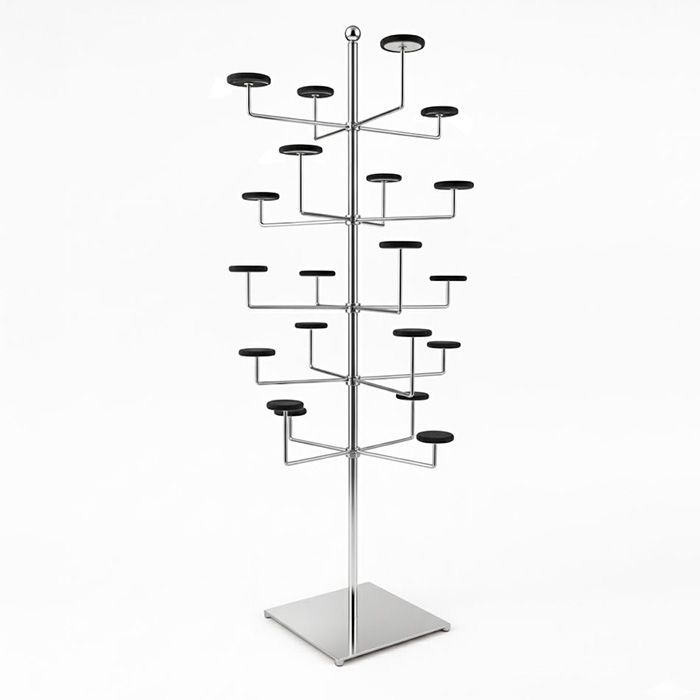
Rotating hat displays, also called spinner racks, are a classic retail hat display solution for these high-traffic areas. A shopper can stay in one spot and spin through a wide range of styles without browsing a full wall. Floor-standing spinners suit casual caps and fedoras; a compact countertop spinner next to the register works well for lower-priced items like visors or beanies as a last add to the basket.
Quick Checklist Before Your Next Floor Refresh
- Are crowns supported? Structure-sensitive hats should sit on crown supports or head forms, not flat shelves.
- Is there vertical variety? Mix wall brackets, nesting tables, and tiered fixtures so the eye keeps moving.
- Is there room for cross-merchandising? Leave space on tables for eyewear, bags, or apparel that complements the hats.
- Are impulse zones covered? A rotating spinner near the register or a busy walkway catches last-minute add-ons.
Frequently Asked Questions
What is the best way to display hats in a retail store?
The best display depends on the hat style. Wide-brim hats and fashion hats generally look best on mannequin heads or crown supports, while baseball caps are often displayed on cap racks, wall systems, or rotating displays that maximize inventory visibility.
How do you display cowboy hats without damaging them?
Dedicated cowboy hat holders support the crown rather than the brim, helping preserve the hat’s shape and preventing long-term deformation that can occur when hats are stacked or stored on flat shelves.
Are rotating hat displays effective?
Yes. Rotating displays allow shoppers to browse a large assortment of hats from a single location and are especially effective near checkout counters, fitting rooms, and other high-traffic areas.
Can a 3-tier display table be used for hats?
Absolutely. A 3-tier display table creates visibility from multiple angles and allows retailers to separate featured styles, core inventory, and complementary accessories without taking up excessive floor space.
Successful hat merchandising comes down to a few fundamentals: protect the shape of the product, create visual variety through different display heights, make good use of wall space, and place key fixtures where customers naturally stop and browse. Whether you’re outfitting a dedicated hat shop, a western wear store, a boutique, or a department store accessory section, the right fixtures can help turn more browsers into buyers.
If you’d like help selecting hat display fixtures, display tables, slatwall accessories, or rotating hat displays for your specific floor plan, contact us online or call our team at (888) 624-8222.