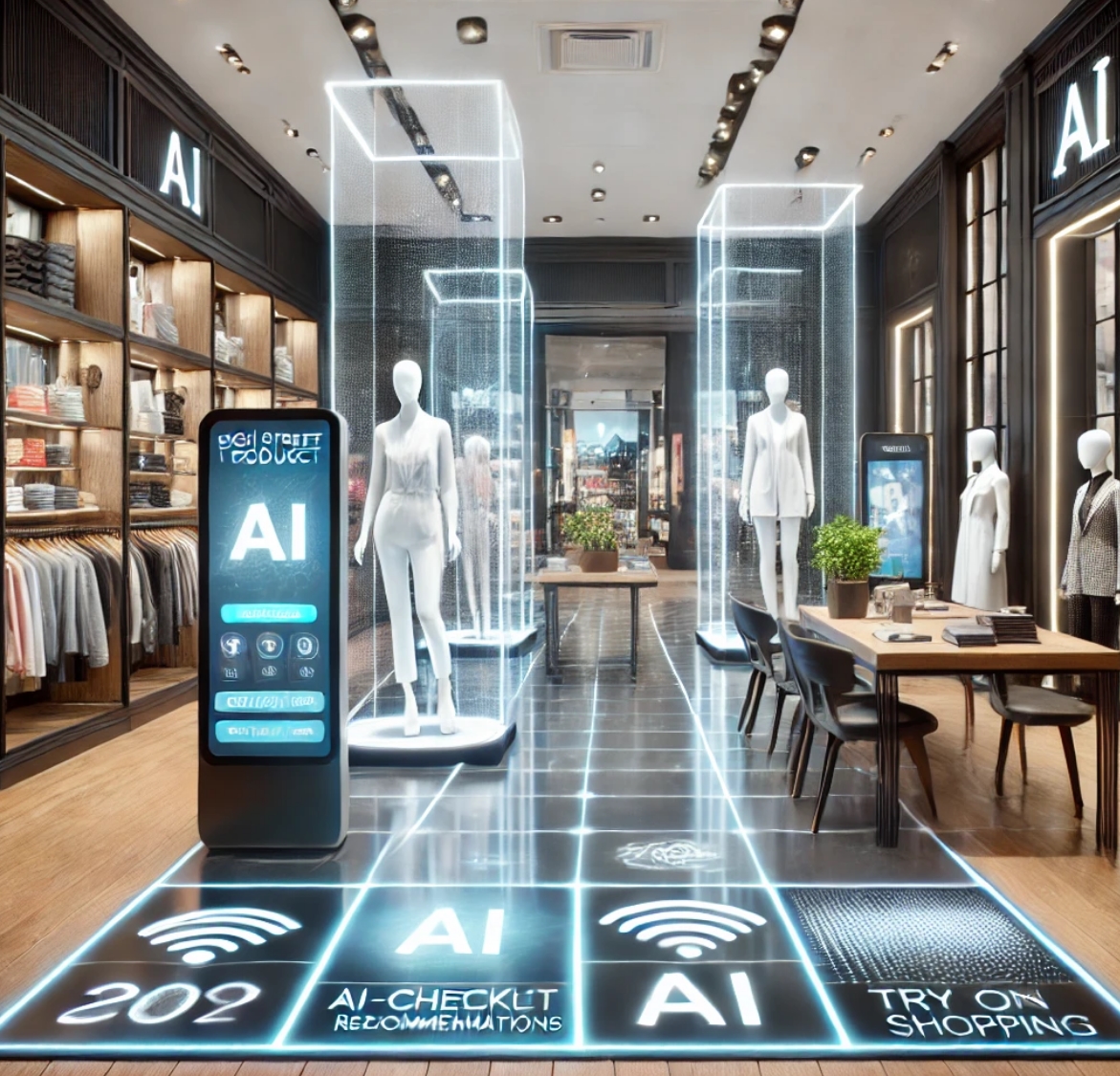
High street retail has faced growing challenges in recent years, with the rise of e-commerce and shifting consumer habits forcing many businesses to rethink their strategies. However, instead of signaling the decline of brick-and-mortar stores, the digital age presents an opportunity for reinvention. Artificial intelligence (AI) is at the forefront of this transformation, empowering high street retailers to enhance customer experiences, streamline operations, and drive sales.
Far from being a threat, AI is proving to be a game-changer that allows traditional retailers to remain competitive in a rapidly evolving market. Let’s explore how AI is revolutionizing high street retail and paving the way for a more efficient, customer-centric shopping experience.
AI-Powered Personalization: The Future of High Street Shopping
One of the most significant advantages of AI in retail is its ability to deliver hyper-personalized shopping experiences. Through machine learning algorithms and real-time customer data analysis, retailers can gain deep insights into shopper behavior, preferences, and purchase history.
With these insights, high street stores can offer:
- Tailored Product Recommendations: AI-driven suggestion engines can recommend items based on past purchases and browsing patterns.
- Personalized Promotions: Dynamic pricing and AI-driven discounts ensure customers receive offers relevant to their interests.
- AI-Powered Virtual Stylists: Interactive displays and smart mirrors help shoppers find the perfect outfit or accessory.
By leveraging AI-powered shopping assistants, high street retailers can bridge the gap between in-store and online experiences, making brick-and-mortar shopping just as convenient and personalized as digital commerce.
Optimizing Inventory and Supply Chains with AI
Managing inventory efficiently is one of the biggest challenges for high street retailers. Overstocking leads to waste, while understocking results in missed sales opportunities. AI-driven predictive analytics solves this problem by forecasting demand with remarkable accuracy.
AI enhances inventory management by:
- Demand Forecasting: AI analyzes shopping trends and sales history to predict which products will be in high demand.
- Automated Restocking: Smart inventory systems alert retailers when stock levels are low, reducing shortages and excess inventory.
- Supply Chain Optimization: AI streamlines logistics, ensuring timely restocking and cost-effective sourcing.
Retailers who integrate AI into their supply chains can reduce waste, lower costs, and ensure customers always find what they need when they walk into a store.
AI Chatbots and Virtual Assistants: Enhancing Customer Service
Customer expectations for instant assistance and personalized support have grown. AI chatbots and virtual assistants are transforming customer service by providing 24/7 support without the need for additional staffing.
Benefits of AI-powered customer support include:
- Instant Query Resolution: Chatbots can answer FAQs, check product availability, and guide customers through the shopping process.
- Multichannel Integration: AI-driven support can assist customers in-store, on mobile apps, and via social media.
- Voice AI Shopping Assistants: Smart voice-enabled kiosks allow customers to find information hands-free.
With AI-driven smart retail solutions, high street stores can provide seamless customer service, improving satisfaction and loyalty.
Immersive AI Shopping: AR, VR, and Smart Displays
AI is not only improving retail efficiency—it’s also enhancing the in-store shopping experience with immersive technologies like augmented reality (AR) and virtual reality (VR).
These AI-powered innovations allow customers to:
- Try Before They Buy: AR mirrors and smart fitting rooms enable virtual try-ons without needing a changing room.
- Visualize Products in Real Life: Customers can see how furniture or decor will look in their homes before purchasing.
- Interactive Window Shopping: AI-driven digital displays respond to movement, showcasing tailored promotions.
By incorporating AI-enhanced experiences, high street retailers can make shopping more engaging and enjoyable, setting themselves apart from online-only competitors.
AI and the Future of Retail Jobs
One common concern is that AI will replace human jobs in retail. However, AI should be seen as a tool for augmentation, not replacement. Instead of eliminating jobs, AI allows staff to focus on higher-value tasks, such as customer engagement and personalized service.
For example:
- AI handles repetitive tasks: Automating inventory tracking and cashier functions frees up employees for customer interactions.
- Data-driven insights empower staff: AI-driven analytics help employees offer better recommendations and service.
- Enhanced training and upskilling: AI-powered training modules improve workforce knowledge and adaptability.
By embracing AI as a collaborative tool, high street retailers can enhance both workforce efficiency and customer experiences.
Final Thoughts: Why AI is the Key to High Street Retail Success
The integration of AI in high street retail is no longer a futuristic concept—it’s happening now. From hyper-personalized shopping to automated inventory management, AI is transforming the way retailers operate.
By investing in AI-powered retail technology, businesses can:
- Deliver personalized experiences that keep customers engaged.
- Optimize inventory and supply chains to minimize waste and boost profits.
- Enhance customer service with intelligent chatbots and virtual assistants.
- Create immersive, AI-driven shopping environments that rival e-commerce convenience.
High street retailers that embrace AI will not only survive but thrive in the digital era. The key is to use AI strategically, leveraging its power to enhance human expertise rather than replace it.
The future of retail belongs to those who innovate, adapt, and evolve—and AI is the driving force that will shape this new era.